
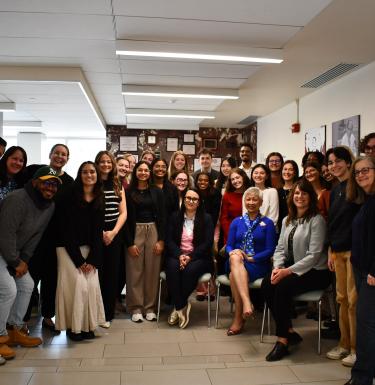
2025 BSPH Capstone Symposium
As part of the nationwide celebration of the 30th anniversary of National Public Health Week (NPHW), 23 Bachelor of Science in Public Health students presented their Capstone Projects at a poster session held in the Pitt Public Health building.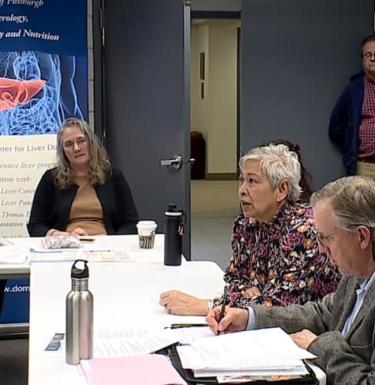
Researchers meet with East Palestine residents to discuss health study
“The concern is that the chemicals that have been released could impact the health of the liver. We’ll be collecting blood and urine from adults 18 years and older,” said Dean Maureen Lichtveld.
A Pitt professor is bringing her global perspective to this African medical research partnership
Tiffany Gary-Webb, professor of epidemiology, has partnered with an African medical research alliance to better understand the prevalence and underlying causes of noncommunicable diseases (NCDs) in Senegal.
Big adventures for little visitors
Pitt Public Health’s Take Your Child to Work Day.
University of Pittsburgh and UNIC Health agreement to advance Public Health
The University of Pittsburgh's School of Public Health and UNIC Health have signed a five-year Memorandum of Understanding, establishing a framework for comprehensive academic collaboration and exchange.
2 Pitt studies looking at health risks of chemicals spilled during East Palestine train derailment
Head researchers Juliane Beier and Dean Maureen Lichtveld said the two-year study started last year and have five community researchers on the ground in East Palestine.
Rachael Rush receives Postdoctoral Leadership Award
The University of Pittsburgh Postdoctoral Association (UPPDA) has honored Rachael Rush, PhD, with the Postdoctoral Leadership Award in recognition of her outstanding service and leadership within the postdoctoral community.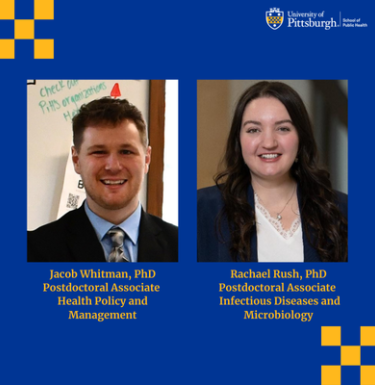
19 people were honored at Pitt’s Postdoctoral Research Symposium
Jacob Whitman, a postdoctoral associate in health policy and management, was recognized for one of the Best Poster Presentations and Rachael Rush, a postdoctoral associate in Infectious Diseases and Microbiology, received the Postdoctoral Leadership Award.
Dara Méndez was honored by Pittsburgh’s Professional Women’s Network
Associate Professor in the Department of Epidemiology and Associate Director of the Center for Health Equity, Dara D. Méndez, has won the Ladies Who Lead Award from Pittsburgh’s Professional Women’s Network.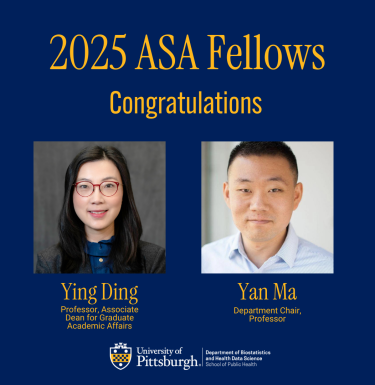
Yan Ma and Ying Ding named Fellows of the American Statistical Association
School of Public Health Department of Biostatistics and Data Health Science faculty members Yan Ma, PhD, chair and professor, and Ying Ding, PhD, professor and associate dean of graduate academic affairs, have been elected Fellows of the American Statistical Association (ASA).
Health Sciences award recipients at Faculty Honors Convocation
On April 3, five Pitt Public Health faculty members were celebrated at Pitt’s Faculty Honors Convocation for their outstanding achievements.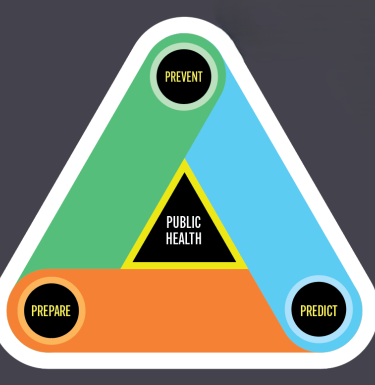
Focus on precision public health
“Precision public health examines the collective influences of environment, lifestyle and genetics at the population level,” explains Dean Maureen Lichtveld.
Enhancing health in Mozambique
Earlier this spring, Jessica Griffin Burke, associate vice chancellor for global affairs, health sciences, and professor of behavioral and community health sciences, traveled to central Mozambique as a representative of the University of Pittsburgh as it solidifies a new relationship with the Gorongosa Restoration Project (GRP).
Stronger Together
A transformative public health partnership for Allegheny County.