
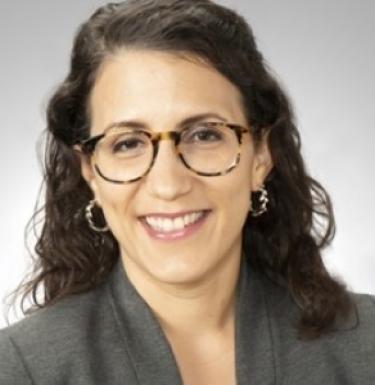
Strong family support helps kids with obesity build hope and lifelong health
Mary Ellen Vajravelu, assistant professor of pediatrics and epidemiology, studies and treats childhood obesity, especially as it impacts diabetes. She's found that a good approach to treating the condition — one that works over time — includes family support, healthcare education and tools, and listening skills.

Unfiltered: What “Big Vape” viewers really think
Buried in hundreds of social media comments is a candid record of how people think and feel, often in ways that surveys and focus groups can’t capture. Pitt Public Health’s Beth Hoffman, PhD, and Arpita Tripathi, MA, used this material for their study of the Netflix docuseries “Big Vape: The Rise and Fall of Juul,” analyzing YouTube comments to understand how viewers responded to the series and the broader conversation around vaping. Their findings appeared in the September 19 issue of JMIR Formative Research.
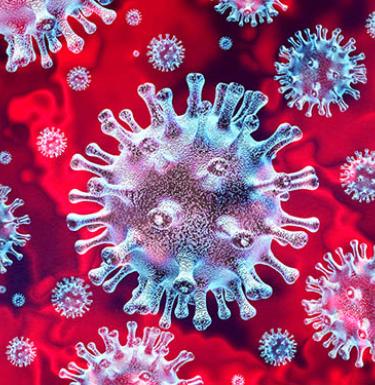
COVID-19 vaccination: Pitt Public Health experts answer your questions
Although the federal public health emergency ended in 2023, COVID-19 continues to evolve and affect health worldwide. The virus remains part of our daily lives and still poses risks, especially for people vulnerable to severe illness. Vaccination remains a key tool for protecting individuals and communities, much like with influenza.
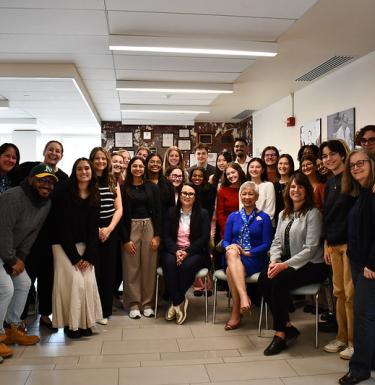
Undergrads embrace public health at Pitt
The University of Pittsburgh School of Public Health is proudly celebrating the rapid growth and success of the Bachelor of Science in Public Health (BSPH) program Since its launch in 2022, the program has expanded to a current enrollment of 499 students, including both internal and external transfers. In April 2024, the first class of nine students graduated, with a second graduating class of 35 students in May 2025.
The hidden link between racism and Alzheimer’s risk
Researchers should include historically minoritized communities in studies of these new frontiers in dementia diagnosis and treatment, says epidemiologist Beth Shaaban of the University of Pittsburgh. If adequate attention isn’t paid to diverse populations, communities that already experience disproportionate rates of dementia will be uninformed about their increased risk, how to lower it and how to access diagnoses and care. “We are very concerned that these disparities and the rapid evolution of the new technology could leave people behind,” Shaaban says.
HIV education and training program funding renewed
The Mid-Atlantic AIDS Education and Training Center (MAAETC) received renewed U.S. Health Resources and Services Administration funding of more than $3.2 million for the second year of a five-year project period ending in 2029. Total funding for the project is nearly $18 million.
Undergraduate scholars finish strong
The Public Health Undergraduate Scholars Program wrapped up its third year with 25 students presenting their work to the Pitt community during a poster session on July 30.
Meet the 'Queen' of 'The Pitt'
Pitt School of Medicine's Sylvia Owusu-Ansah, MD, credits BCHS's Beth Hoffman, PhD, for getting her connected to HBO Max's hit medical drama, "The Pitt," where she's served as a physician consultant.
Brunick and Soni 2025–26 TIPH Ambassadors
Two Pitt Public Health graduate students, McKenna Brunick and Maahi Soni, have been selected as This is Public Health (TIPH) ambassadors for the 2025–26 academic year.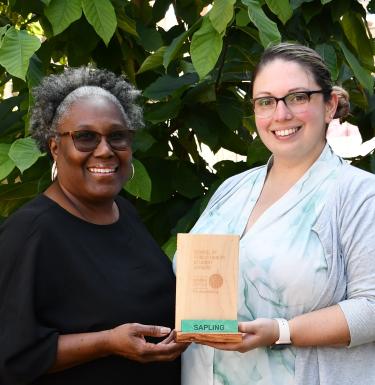
Student Affairs earns Pitt Sustainability recognition
The Office of Student Affairs at Pitt Public Health is celebrating a new milestone: recognition from Pitt’s Office of Sustainability as a Green Office at the Sapling level. That makes Student Affairs the first office in the school to earn the designation.
Pitt studies highlight access to treatment in a Health Affairs special issue on Opioid Use Disorder
In a themed issue on the opioid crisis published in Health Affairs, three studies from University of Pittsburgh School of Public Health researchers underscore gaps in access to methadone, a medication that can reduce the risk of overdose-related deaths by 50% or more, and other evidence-based interventions.
ADHD drugmakers double marketing spending to clinicians
“What stood out in our findings was the increasing role of marketing payments directed toward advanced practice clinicians,” said J. Travis Donahoe, PhD, MPH, assistant professor of health policy and management at the University of Pittsburgh School of Public Health and the lead author of the study.
Allison co-chairs NIH grant session
At the annual meeting of the International Society of Exposure Science and the International Society of Environmental Epidemiology, researchers, public health leaders and community advocates gathered for a session titled “Joining Forces in the Face of Disaster: How Five Universities Address Exposure and Health Concerns Resulting from the East Palestine, Ohio Train Derailment.”
Maureen Lichtveld to talk about global health landscape for CIF
Dean Lichtveld speaks on “Lessons from COVID, the Imminent Avian Bird Flu Threat, and the Certainty of Future Pandemics,” at the Chautauqua Insitute. Her talk provides a candid assessment of the global health landscape. She examines "what went wrong, what went right, and what we must do now to protect public health, strengthen resilience and navigate the challenges ahead.”