
Jean Nachega inducted into the Congolese Academy of Sciences
Jean B. Nachega, MD, PhD, MPH, tenured associate professor of infectious diseases and microbiology at the University of Pittsburgh School of Public Health, has been formally inducted into the Académie Congolaise des Sciences (ACCOS), the Congolese Academy of Sciences.
Outbreak detection system saves lives
Alexander Sundermann, DrPH, assistant professor of infectious diseases and microbiology, discusses the development of an advanced outbreak detection system that leverages whole genome sequencing and machine learning to identify hospital-acquired infections more quickly and accurately. During a two year trial at UPMC, the system prevented numerous infections and deaths, while also significantly reducing healthcare costs. The findings suggest that broader implementation of this technology could greatly enhance patient safety and infection control in healthcare settings.
HIV education and training program funding renewed
The Mid-Atlantic AIDS Education and Training Center (MAAETC) received renewed U.S. Health Resources and Services Administration funding of more than $3.2 million for the second year of a five-year project period ending in 2029. Total funding for the project is nearly $18 million.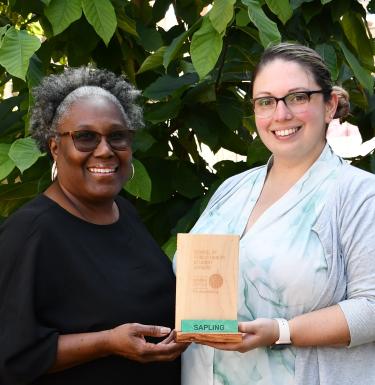
Student Affairs earns Pitt Sustainability recognition
The Office of Student Affairs at Pitt Public Health is celebrating a new milestone: recognition from Pitt’s Office of Sustainability as a Green Office at the Sapling level. That makes Student Affairs the first office in the school to earn the designation.

New Pitt classes and programs launch in fall 2025
Pitt Public Health is offering new courses for fall 2025, including a Disaster Preparedness Certificate and a course in AI in Health Data Science, as well as training opportunities through the Center of Excellence in Maternal and Child Health.
CSI: Infection Control
Through 15 seasons and four spinoff shows, the intrepid investigators of television’s CSI franchise solved crimes with forensic science. Alexander Sundermann (DrPH, EPI ’22, MPH, IDM ’14) assistant professor of epidemiology, is investigating health care-associated infections with the same zeal to stop dangerous pathogens in their tracks—before they spread.
Kuchipudi receives Fulbright Specialist award
School of Public Health researcher Suresh Kuchipudi, PhD, MVSc, MBA, will lead a One Health-based research and education program at the Universiti Malaya in Kuala Lumpur, Malaysia this September.
Study: Emerging virus can infect placenta
A University of Pittsburgh team led by Department of Infectious Disease and Microbiology's Cynthia McMillen, PhD, has demonstrated that insect-spread Oropouche virus (OROV) can evade antiviral defenses in the placenta and infect the vital organ that connects mother and baby during fetal development.
Pitt researchers want farmers' input for Asian longhorned tick study
“We’re really trying to work with livestock producers to help safeguard their herd health and productivity, and work to support Pennsylvania’s agricultural infrastructure,” said Danielle Tufts, assistant professor at Pitt’s School of Public Health and researcher of the study.
Consortium Connections: One Health in the spotlight
Representatives from across the Commonwealth recently took part in the first annual meeting of the Pennsylvania One Health Consortium, a coalition of experts focused on improving health and well-being for all Pennsylvanians.
Ticky business: How Pitt researchers track the 8-legged bloodsuckers
When Pitt Public Health professor Danielle Tufts and her team of students go out, they bring just a few things: A white jumpsuit, a pair of tweezers, some tiny vials to store specimens and a meter-long piece of white corduroy.
Dengue severity linked to genetic ancestry’s influence on immune response
Priscila Castanha, PhD, assistant professor of infectious diseases and microbiology, and colleagues have linked the extreme variability in severity of the mosquito-borne viral disease dengue to the influence of genetic ancestry on inflammatory responses in the skin.
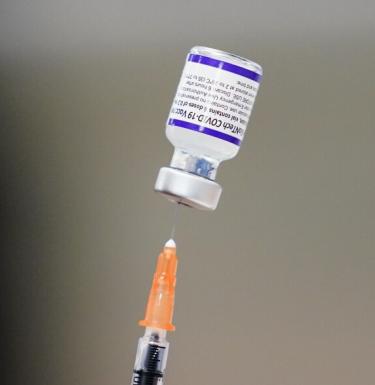
mRNA vaccine technology makes headway via Pitt, Penn State research
"This study demonstrated two key aspects," said Suresh Kuchipudi, senior author on the paper and chair of infectious diseases and microbiology, "that we can produce mRNA vaccines with much less mRNA required, that will significantly lower the cost of the vaccines."
Research funding makes understanding diseases like Avian Flu possible
Professor and chair of Infectious Diseases and Microbiology, Suresh Kuchipudi, focuses on avian flu and other animal-borne viruses and how they affect humans and animals.