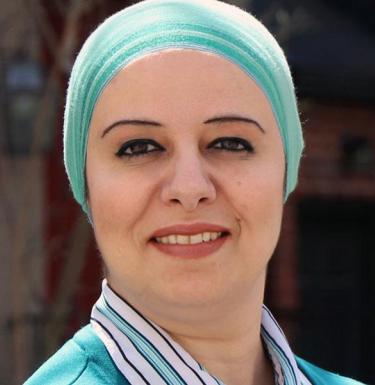
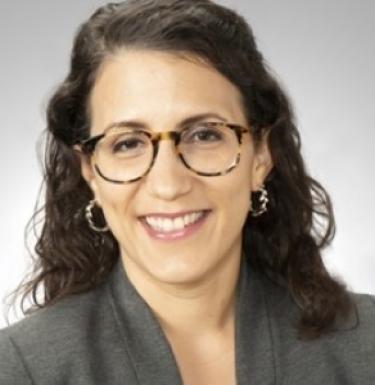
Strong family support helps kids with obesity build hope and lifelong health
Mary Ellen Vajravelu, assistant professor of pediatrics and epidemiology, studies and treats childhood obesity, especially as it impacts diabetes. She's found that a good approach to treating the condition — one that works over time — includes family support, healthcare education and tools, and listening skills.

The hidden link between racism and Alzheimer’s risk
Researchers should include historically minoritized communities in studies of these new frontiers in dementia diagnosis and treatment, says epidemiologist Beth Shaaban of the University of Pittsburgh. If adequate attention isn’t paid to diverse populations, communities that already experience disproportionate rates of dementia will be uninformed about their increased risk, how to lower it and how to access diagnoses and care. “We are very concerned that these disparities and the rapid evolution of the new technology could leave people behind,” Shaaban says.
CSI: Infection Control
Through 15 seasons and four spinoff shows, the intrepid investigators of television’s CSI franchise solved crimes with forensic science. Alexander Sundermann (DrPH, EPI ’22, MPH, IDM ’14) assistant professor of epidemiology, is investigating health care-associated infections with the same zeal to stop dangerous pathogens in their tracks—before they spread.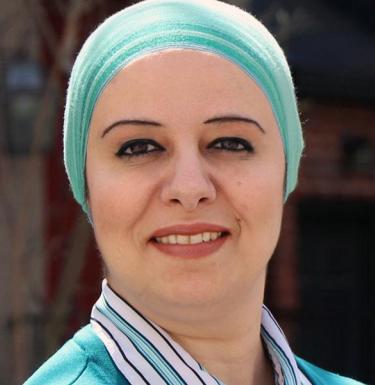
Vaginal estrogen tablets not linked with increased recurrent stroke risk
“As an epidemiologist, I see this study as a valuable contribution because it focuses on a population often excluded from hormone therapy research, midlife women with a prior stroke, and examines an increasingly used route of administration: vaginal tablets," said Samar R. El Khoudary, PhD, professor of epidemiology at the University of Pittsburgh School of Public Health.
Military honors Pitt researchers for work on cold-stored platelets in trauma
Epidemiology Data Center's Stephen Wisniewski was part of a team of Pitt researchers who received an award for outstanding research at the 2025 Military Health System Research Symposium in Kissimmee, Florida, on Aug. 4. The team was honored for their work on the Linking Investigations in Trauma and Emergency Services (LITES) Network.
Public Health in Action: The Pittsburgh Summer Institute
Nine Pitt Public Health students participated in the 2025 Pittsburgh Summer Institute (PSI), a long-standing partnership between the school and the Allegheny County Health Department. Now in its 14th year, PSI offers a 200-hour practicum that blends the structure of a traditional internship with hands-on workforce development. The students presented their projects at a final showcase at the school on July 23.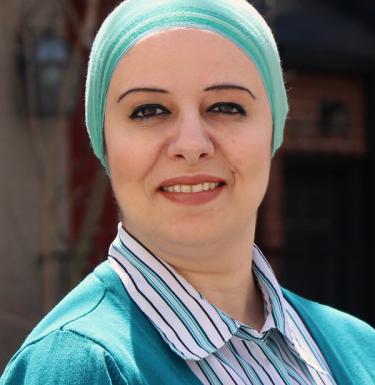
Only 21% of midlife women have ideal Life’s Essential 8 scores
"The menopause transition is really a turning point for cardiovascular health," says Samar R. El Khoudary, a professor of epidemiology at the University of Pittsburgh School of Public Health.

Searching for the keys to healthy aging
“Most people will have a period of poor health at the end of their lives no matter how long they live,” says Anne Newman, MD, MPH, distinguished professor of epidemiology, School of Public Health, and clinical director of the joint Pitt-UPMC Aging Institute. “But the goal of what we call ‘healthspan’ is to optimize health for as long as possible.”
Tiffany Gary-Webb receives inaugural Dr. Felicia Hill-Briggs Health Equity Trailblazer in Diabetes Award
The American Diabetes Association presented the inaugural Dr. Felicia Hill-Briggs Health Equity Trailblazer in Diabetes Award to Epidemiology's Tiffany Gary-Webb.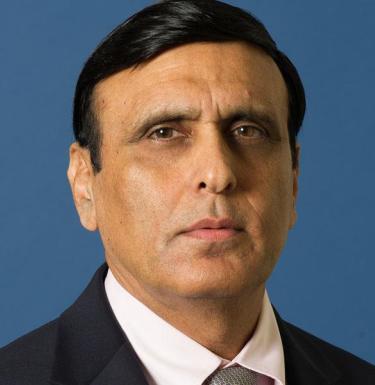
Pitt researchers discover distinct Alzheimer’s pathways in Down Syndrome
By analyzing genetic samples collected by the Alzheimer’s Biomarker Consortium–Down Syndrome, a team of researchers led by Ilyas Kamboh, a professor of human genetics and epidemiology at Pitt’s School of Public Health, discovered several distinct gene regions associated with adverse levels of amyloid and clumping-prone tau in the blood.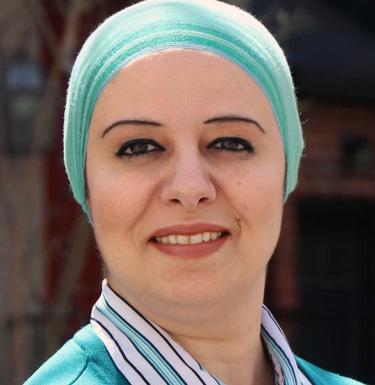
Why sleep is the single most important way to protect your health post-menopause
Samar R. El Khoudary, professor of epidemiology at Pitt's School of Public Health, encourages women to "take the reins on their heart health."
Alarming number of measles cases sees U.S. on course to no longer consider the disease eradicated
“This is very worrisome,” said Donald Burke, former dean of the University of Pittsburgh School of Public Health and an epidemiologist. Measles cases, he said, are “going in the wrong direction.”
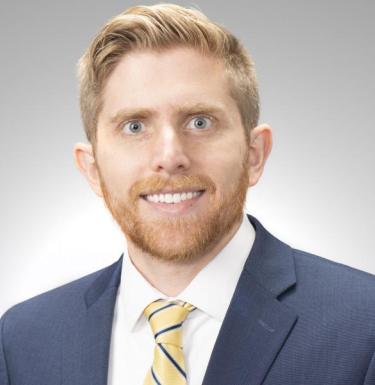
We're Racing to Implement AI in Healthcare. But Who's Guiding the Way?
Alexander Sundermann, DrPH, assistant professor of epidemiology at Pitt Public Health, cautions against a full speed approach to implementing AI into clinical practice without adequate testing and oversight.
5 Pitt health sciences faculty members received 2025 Ascending Star Awards
Sonja Swanson, associate professor of epidemiology, is one of five faculty members in Pitt's Schools of the Health Sciences to receive a 2025 Ascending Star Award. She will give a research talk on September 4 at 3:30 p.m. in Alan Magee Scaife Hall, room 3785.