C.C. and Clara Li Endowed Scholarship

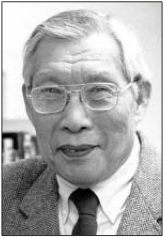
C.C. LiWith generous support from C.C. Li’s two children, Carol S. Li and Steven M. Li, and his wife, Clara, established the C.C. and Clara Li Endowed Scholarship in summer 2015.

Devoted to advancing the recruitment of top master's and doctoral applicants to the Department of Human Genetics, the endowment can be used to support tuition, travel, or other educational expenses for students studying at any level in the department. C. C. and Clara Li Scholar Awards are offered to an incoming student from each of the department’s programs. Awards may also be used to help promising current students attend a scientific meeting to present their research.

The award honors the legacy of C.C. Li, who served as chair of the Department of Biostatistics and was a biostatistics and human genetics faculty member at Pitt Public Health for more than 45 years. A recipient of the American Society of Human Genetics Award for Excellence in Human Genetics Education, Li authored several textbooks—including First Course in Population Genetics—that are considered to be classics in the field and have been translated into several languages.

The Li family’s generous support of Pitt Public Health dates back many years and also includes a $1 million planned gift commitment to create a research fund for the Department of Human Genetics. The inaugural C.C. and Clara Li scholars were awarded in 2017, and formally announced at the 2018 C.C. Li Memorial Lecture.

About

CC Li in 2002Ching Chun "C.C." Li was born in Tianjin, China, in 1912. He received his bachelor’s degree in agronomy from the University of Nanking before coming to the United States for a doctorate in plant breeding and genetics at Cornell University. He returned to China and, in 1946, joined National Beijing University where he later served as chair of the agronomy department and wrote his first book, Population Genetics, at age 34. With the introduction of the Communist government to China in 1949, Li and his family fled to Hong Kong. American colleagues recommended the geneticist to Thomas Parran, former U.S. surgeon general and first dean of the newly created University of Pittsburgh Graduate School of Public Health. Li joined the faculty in 1951, served as chair of the biostatistics department from 1969 to 1975, and officially retired in 1982 (though he would publish another 25 papers and continue to come to his Pitt Public Health office every day until a few months before his death). 

Li's textbooks, including First Course in Population Genetics, are considered classics in the field and have been translated into several languages. A fellow of the American Statistical Association and the American Association for the Advancement of Science, he also served as president of the American Society of Human Genetics and was a member of the International Statistical Institute. In 1998 the American Society of Human Genetics presented him with its Award for Excellence in Human Genetics Education. Li died on October 20, 2003, just seven days shy of his 91st birthday.

""

A Memory by Dan Weeks

"I first met C.C. Li when I was a graduate student at UCLA and C.C. teaching a course in population genetics as a visiting scholar. While his class was very good and I learned a lot, I had no idea that later I would be fortunate enough to come to Pittsburgh to his department...

Shortly after my arrival in Pittsburgh in the early 1990s, I had the pleasure of working with C.C. on a paper dealing with the probability of a random match between the two DNA profiles of a pair of individuals. The mathematics was challenging, and it was difficult to visualize exactly what was going on in our multidimensional model. Then, one morning, C.C. came into my office with an elegant three-dimensional paper model that he had made that provided great insight into the properties of our model. I kept this wonderful paper model on top of my computer monitor for many years as a gentle reminder that the best mathematical modeling often results from sharp intellectual insight, rather than from extensive computer-based simulations."

-Dan Weeks, Professor in Human Genetics and Biostatistics and Health Data Science

C.C. Li and the Department of Human Genetics

This brief history highlights C.C. Li's contributions to the University of Pittsburgh School of Public Health and his pivotal role in the creation of the Department of Human Genetics. From these distinguished beginnings, the department has grown to achieve a preeminent reputation for groundbreaking contributions to human genetics that extends to its research and training programs today. We welcome you to our esteemed community of scholars. 

1948

Pitt Public Health is established with a $513 million gift from the A.W. Mellon Educational and Charitable Trust.

1950

the Committee on Professional Education of the American Public Health Association accredits Pitt Public Health to offer courses toward master's degrees and doctorates in public health. The first 30 students are admitted that fall. 

1950-1970

Faculty in the Department of Biostatistics—one of the school's four original departments—develop a vibrant, diverse research program to address public health challenges ranging from genetics, demography and medical care statistics to chronic disease epidemiology. 

1951

The Department of Human Genetics owes its origins to the recruitment of C.C. Li, who joined the Pitt faculty on the recommendation of geneticist and 1948 Nobel Laureate Hermann J. Muller. Li is noted for his fundamental contributions to quantitative genetics and experimental design. Under Li's direction, the program grows to encompass populations genetics and laboratory research—particularly cytogenetic studies, as well as one of the first genetic counseling programs in the United States. 

1955

Li's seminal book "Population Genetics," is published. This and several other textbooks on population genetics written by Li are considered classics in the field. At this time, Li is one of the few scientists to study genetic connections to chronic diseases. In so doing, he helps to advance our understanding of the medical importance of genetics—a first step toward genetic testing, counseling, and gene therapy. He and colleague J. Howard Turner, ScD, are the first to suggest 6% of newborns might develop a hereditary disease during their lives. 

Li develops several statistical methods including a way to compare the similarities between variable number tandem repeats (VNTRs), better known as "DNA fingerprints" that are used in forensics. His pioneering research in "the single methods" of segregation, calculation of posterior probability of paternity, and analysis of variance in linear models help the school gain national and international recognition in statistical and population genetics. Later, as chair of the Department of Biostatistics, Li begins laying the foundation for human genetics to become its own department. His studies focus on the intersection between science and society, and he is an early supporter of genetic counseling. 

1960

Li serves as president of the American Society of Human Genetics, which later presents him with its Award for Excellence in Human Genetics Education for contributions recognized as being of "exceptional quality and great importance." 

1971

Turner founds Pitt's Genetic Counseling Program, one of the nation's oldest. The two-year program has produced hundreds of genetic counselors who serve families and patients afflicted with genetic diseases all across North America. 

1989

The genetics program is upgraded to a full Department of Human Genetics, with cancer epidemiologist John J. Mulvihill, MD, as chair. It is the first such department within a public health school in the U.S. The Department of Human Genetics has contributed significantly to our understanding of the genetic basis for many diseases affecting human health. 

Transformative research discoveries relevant to cystic fibrosis, lymphedema, Alzheimer's disease, lupus, and cancer can be traced to studies conducted by department-affiliated investigators. Hundreds of genetics graduates have moved on to exciting and prestigious careers in academics and industry. 

Grid with Text (Y) Item: 2004, The department establishes a Master of Publi
2004

The department establishes a Master of Public Health (MPH) in genetics and a dual genetic counseling/MPH degree program. 

Grid with Text (Y) Item: 2017, The first C.C. and Clara Li Endowed Scholars
2017

The first C.C. and Clara Li Endowed Scholarships are awarded. 

Grid with Text (Y) Item: 2019, The MS in genome bioinformatics begins. , gr
2019

The MS in genome bioinformatics begins. 

Articles About C.C. Li
C.C. Li's Bibliography

All of C.C. Li's references which were in the online databases; the majority of these have a hyperlink to an online abstract or citation. For a complete listing of C.C. Li's references, see his C.V.

  • Li CC (1948) An introduction to population genetics. National Peking University Press, Peiping
  • Glass B, Li CC (1953) The dynamics of racial intermixture; an analysis based on the American Negro. Am J Hum Genet 5:1-20. Link
  • Li CC (1953a) On an equation specifying equilibrium populations. Science 117:378-9. Link
  • Li CC (1953b) Some general properties of recessive inheritance. Am J Hum Genet 5:269-79. Link
  • Li CC, Horvitz DG (1953) Some methods of estimating the inbreeding coefficient. Am J Hum Genet 5:107-17. Link
  • Li CC (1954a) The correlation between parents and offspring in a random mating population. Am J Hum Genet 6:383-6. Link
  • Li CC (1954b) Linkage versus association. Methods Med Res 6:33-8. Link
  • Li CC (1954c) Methods for establishing the genetic role. Methods Med Res 6:24-32. Link
  • Li CC (1954d) Segregation of recessive offspring. Methods Med Res 6:3-16. Link
  • Li CC (1954e) The severity of an abnormality. Methods Med Res 6:17-23. Link
  • Li CC (1955) Population genetics. University of Chicago Press, [Chicago].
  • Li CC (1956a) The components of sampling variance of ABO gene frequency estimates. Am J Hum Genet 8:133-7. Link
  • Li CC (1956b) The concept of path coefficient and its impact on population genetics. Biometrics 12:190--210.
  • Li CC (1959) Numbers from experiments; a basic analysis of variation. Boxwood Press, Pittsburgh.
  • Degroot MH, Li CC (1960) Simplified method of estimating the MNS gene frequencies. Ann Hum Genet 24:109-15. Link
  • Li CC (1960) A diagrammatic representation of the proportions of genotypes and phenotypes in a panmictic population. Ann Hum Genet 24:117-9. Link
  • Li CC (1961a) The diminishing jaw of civilized people. Am J Hum Genet 13:1-8. Link
  • Li CC (1961b) Genetic methods for epidemiological investigations: a synthesis. Ann N Y Acad Sci 91:806-12. Link
  • Li CC (1961c) Human genetics; principles and methods. Blakiston Division, New York.
  • Boyd WC, Li CC (1963) Rates of Selective Action on Unifactorial and Multifactorial Traits. Am J Phys Anthropol 21:521-6. Link
  • Li CC (1963a) 3. The way the load ratio works. Am J Hum Genet 15:316-21. Link
  • Li CC (1963b) Decrease of population fitness upon inbreeding. Proc Natl Acad Sci U S A 49:439-45. Link
  • Li CC (1963c) Genetic aspects of consanguinity. Am J Med 34:702-14. Link
  • Li CC (1964a) Estimate of Recessive Proportion by First Appearance Time. Ann Hum Genet 28:177-80. Link
  • Li CC (1964b) Introduction to experimental statistics. McGraw-Hill, New York.
  • DeGroot MH, Li CC (1966) Correlations between similar sets of measurements. Biometrics 22:781--790.
  • Li CC (1967a) Castle's early work on selection and equilibrium. Am J Hum Genet 19:70-4. Link
  • Li CC (1967b) Fundamental theorem of natural selection. Nature 214:505-6. Link
  • Li CC (1967c) Genetic equilibrium under selection. Biometrics 23:397-484. Link
  • Li CC (1967d) The maximization of average fitness by natural selection for a sex-linked locus. Proc Natl Acad Sci U S A 57:1260-1. Link
  • Li CC (1968) Fisher, Wright, and path coefficients. Biometrics 24:471-83. Link
  • Li CC, Mantel N (1968) A simple method of estimating the segregation ratio under complete ascertainment. Am J Hum Genet 20:61-81. Link
  • Rao BR, Garg ML, Li CC (1968) Correlation between the sample variances in a singly truncated bivariate normal distribution. Biometrika 55:433-436.
  • Falk CT, Li CC (1969) Negative assortative mating: exact solution to simple model. Genetics 62:215-23. Link
  • Li CC (1969a) Increment of average fitness for multiple alleles. Proc Natl Acad Sci U S A 62:395-8. Link
  • Li CC (1969b) Population subdivision with respect to multiple alleles. Ann Hum Genet 33:23-9. Link
  • Li CC (1970) Table of variance of ABO gene frequency estimates. Ann Hum Genet 34:189-94. Link
  • Li CC (1971) Unsymmetric equilibria under two-locus symmetric selection model. J Hered 62:47-8. Link
  • Raja Rao B, Mazumdar S, Li CC (1973) A note on a conditional distribution involving a Yule process. Statist. Hefte (N.F.) 14:277--281.
  • Rao BR, Mazumdar S, Waller JH, Li CC (1973) Correlation between the numbers of two types of children in a family. Biometrics 29:271-9. Link
  • Waller JH, Rao BR, Li CC (1973) Heterogeneity of childless families. Soc Biol 20:133-8. Link
  • Mantel N, Li CC (1974) Estimation and testing of a measure of non-random mating. Ann Hum Genet 37:445-54. Link
  • Waller J, Rao BR, Li CC (1974) Letter: Reply to Mitra's observations on 'Heterogeneity of childless families'. Soc Biol 21:309-10. Link
  • Mantel N, Li CC (1974/75) Errata: ``Estimation and testing of a measure of non-random mating''\ (Ann. Human Genetics {\bf 37} (1973/74), 445--454). Ann. Human Genetics 38:382.
  • Li CC (1975a) [General concepts of quantitative genetics applied to human populations]. Orthod Fr 46:55-69. Link
  • Li CC (1975b) Path analysis: a primer. Boxwood Press, Pacific Grove, Calif.
  • Li CC (1975c) Path coefficients and derivatives. Biometrical Journal. Journal of Mathematical Methods in Biosciences. [Continues: Biometrische Zeitschrift. Zeitschrift für mathematische Methoden in den Biowissenschaften] 17:213-216.
  • Li CC, Mazumdar S, Rao BR (1975) Partial correlation in terms of path coefficients. The American Statistician 29:89-90.
  • Li CC (1976a) First course in population genetics. Boxwood Press, Pacific Grove, Calif.
  • Li CC (1976b) The testing of dominants for heterozygoisty. Ann Hum Genet 40:183-90. Link
  • Li CC, Mazumdar S (1976) Analysis of dichotomized factorial data. Journal of Chronic Diseases 29:355-370.
  • Wald N, Fatora SR, Herron JM, Preston K, Jr., Li CC, Davis L (1976) Status report on automated chromosome aberration detection. J Histochem Cytochem 24:156-9. Link
  • Li CC (1977) Separation of common environment and dominance effects with classic kinship correlation models. Soc Biol 24:259-66. Link
  • Li CC (1978) On measuring genetic distance by selection intensity. Ann Hum Genet 41:501-4. Link
  • Li CC, Mazumdar S (1981) A type of orthogonal contrasts for unbalanced data. Biometrical J. 23:645--651.
  • Li CC (1982) Analysis of unbalanced data: a pre-program introduction. Cambridge University Press, Cambridge; New York.
  • Rao BR, Li CC (1982) The geometry of path coefficients and correlations. Biometrical Journal. Journal of Mathematical Methods in Biosciences. [Continues: Biometrische Zeitschrift. Zeitschrift fur mathematische Methoden in den Biowissenschaften] 24:673-678.
  • Chakravarti A, Li CC (1983) The probability of exclusion based on the HLA locus. Am J Hum Genet 35:1048-52. Link
  • Chakravarti A, Li CC (1984) Estimating the prior probability of paternity from the results of exclusion tests. Forensic Sci Int 24:143-7. Link
  • Chakravarti A, Li CC, Buetow KH (1984) Estimation of the marker gene frequency and linkage disequilibrium from conditional marker data. Am J Hum Genet 36:177-86. Link
  • Li CC (1984) Some methodological developments in genetic epidemiology. Prog Clin Biol Res 147:159-72. Link
  • Li CC, Chakravarti A (1985) Basic fallacies in the formulation of the paternity index. Am J Hum Genet 37:809-18. Link
  • Li CC (1986a) Effect of father's education on child's cognitive ability. Soc Biol 33:316-21. Link
  • Li CC (1986b) Inbreeding and the balance between selection and mutation. Prog Clin Biol Res 218:31-44. Link
  • Li CC (1986c) A method of subdividing genetic data into self-contained subsets. Ann Hum Genet 50 (Pt 3):259-70. Link
  • Chakravarti A, Badner JA, Li CC (1987) Tests of linkage and heterogeneity in Mendelian diseases using identity by descent scores. Genet Epidemiol 4:255-66. Link
  • Li CC (1987) A genetical model for emergenesis: in memory of Laurence H. Snyder, 1901-86. Am J Hum Genet 41:517-23. Link
  • Li CC, Chakravarti A, Halloran SL (1987) Estimation of segregation and ascertainment probabilities by discarding the single probands. Genet Epidemiol 4:185-91. Link
  • Li CC (1988a) Pseudo-random mating populations. In celebration of the 80th anniversary of the Hardy-Weinberg law. Genetics 119:731-7. Link
  • Li CC (1988b) Steinberg's new paternity probability. Am J Hum Genet 42:390-1. Link
  • Li CC, Chakravarti A (1988) An expository review of two methods of calculating the paternity probability. Am J Hum Genet 43:197-205. Link
  • Majumder PP, Das SK, Li CC (1988) A genetical model for vitiligo. Am J Hum Genet 43:119-25. Link
  • Li CC (1991a) Genetics of subdivided populations and its relationships with certain measures of association. Genet Epidemiol 8:1-11. Link
  • Li CC (1991b) Method of path coefficients: a trademark of Sewall Wright. Hum Biol 63:1-17. Link
  • Li CC, Weeks DE, Chakravarti A (1993) Similarity of DNA fingerprints due to chance and relatedness. Hum Hered 43:45-52. Link
  • Li CC, Chakravarti A (1994) DNA profile similarity in a subdivided population. Hum Hered 44:100-9. Link
  • Weeks DE, Young A, Li CC (1995) DNA profile match probabilities in a subdivided population: when can subdivision be ignored? Proc Natl Acad Sci U S A 92:12031-5. Link
  • Li CC (1996) Population genetics of coincidental DNA matches. Hum Biol 68:167-84. Link
  • Guo SW, Zheng CJ, Li CC (1997) 'Gene war of the century'? Science 278:1693-4. Link
  • Chen TT, Tai JJ (1998) A conversation with C. C. Li. Statist. Sci. 13:378--387.
  • Guo SW, Zheng CJ, Li CC (1998) Dilemma over genetics and population in China. Nature 394:313-4. Link
  • Li CC, Chiu CH, Wu JL, Huang YC, Lin TY (1998) Antimicrobial susceptibilities of Campylobacter jejuni and coli by using E-test in Taiwan. Scand J Infect Dis 30:39-42. Link
  • Li CC (1999) 1998 ASHG Award for Excellence in Education. Remarks on receiving the ASHG award: science and science education. Am J Hum Genet 64:16-7. Link
  • Li CC (2000) Progressing from eugenics to human genetics. Celebrating the 70th birthday of professor Newton E. Morton. Hum Hered 50:22-33. Link